Wisconsin holds its partisan primary on Tuesday, August 11. Two of the races on that ballot will help decide who holds power over the proposed 765 kV transmission lines through the Driftless region and on into south-central Wisconsin: the race for governor, and the race for the U.S. House seat in Wisconsin’s 3rd Congressional District, which covers many of the counties in the lines’ path.
The connection is structural, not partisan. The governor appoints the three commissioners of the Public Service Commission of WisconsinThe state board that decides whether power lines get built. The application it reviews — a Certificate of Public Convenience and Necessity, or CPCN — opens the formal window where the public can comment and intervene. — the body that will decide whether to grant the MariBell project a Certificate of Public Convenience and NecessityA Certificate of Public Convenience and Necessity — the construction permit the developers must win from the Wisconsin PSC before they can build. The CPCN case is where the public can formally weigh in., the state approval it needs to be built. An application is expected this fall. Members of Congress, for their part, vote on federal energy legislation and weigh in with the federal regulators who set transmission incentives.
So we asked. In late July, No 765 Line, Inc. sent a short written survey to the campaigns in both races: three questions for the candidates for governor, two for the candidates in the 3rd District. Every campaign got the same questions, the same deadline — Monday, August 3 — and the same promise: whatever they send, we print in full, unedited. Below are the questions, and every answer we have received.
Sources · PSC appointment authority: Wis. Stat. § 15.06(1)(c)1; CPCN requirement: Wis. Stat. § 196.491(3); primary date: Wisconsin Elections Commission, Calendar of Election Events
We emailed the same written questions to every active campaign in each race between July 30 and July 31, 2026, using the contact addresses published by each campaign, and asked for replies by Monday, August 3. Responses are published in full and unedited — we do not trim, paraphrase, or annotate them. Three candidates whose names remain on the printed ballot ended their campaigns before the survey was sent; they were not surveyed and are noted below. Campaigns that had not replied by publication are marked “did not reply”; any response that arrives later will be added, in full, with the date we received it. A campaign that wants to respond or revise can reach us at info@no765line.org.
Governor of Wisconsin
All active candidates on the August 11 primary ballot, both parties, listed alphabetically within party. Each campaign received these three questions:
- What is your position on the proposed MariBell 765 kV transmission line and the associated 765 kV projects (ie, “BECI line”) planned for Wisconsin?
- The governor appoints the three commissioners of the Public Service Commission, which will decide whether these lines are approved. What approach would guide your PSC appointments with respect to transmission siting, need determination, and cost allocation to Wisconsin ratepayers?
- What is your position on the use of eminent domain to acquire easements from Wisconsin landowners for interstate transmission projects?
Joel Brennan
The campaign was contacted on Jul. 31 and Aug. 3, 2026, and had not replied when this article was last updated. Any response received will be added here in full.
Photo · Joel Brennan for Governor campaign website, used with permission.
David Crowley
The campaign was contacted on Jul. 31 and Aug. 3, 2026, and had not replied when this article was last updated. Any response received will be added here in full.
Photo · David Crowley for Governor campaign website, used with permission.
Francesca Hong
“765 forces rural communities to subsidize Big Tech’s consumption with no gain.”
Full response, unedited
“The 765kv line is an effort to trample through the Driftless in order to meet skyrocketing power needs led by massive AI data centers. While we care about thoughtfully moving clean energy throughout Wisconsin, 765 forces rural communities to subsidize Big Tech’s consumption with no gain. As governor, Fran would support legislation compelling utility companies to prioritize building transmission lines along existing corridors like highways instead of disrupting ecologically sensitive land, alongside regulations ensuring that energy development serves Wisconsinites, not Wall Street.”
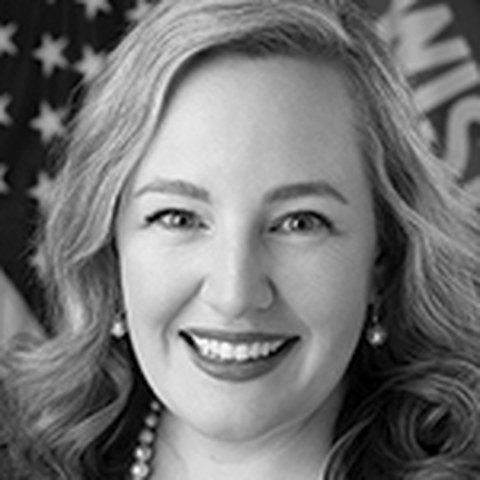
Kelda Roys
“I have grave concerns about the proposed MariBell line, as it is slated to traverse some of the most ecologically valuable and sensitive parts of the Driftless region, and the broader BECI line across southern Wisconsin from Portage to Beloit and points in between.”
Full response, unedited
1. What is your position on the proposed MariBell 765 kV transmission line and the associated 765 kV projects (ie, “BECI line”) planned for Wisconsin?
I have grave concerns about the proposed MariBell line, as it is slated to traverse some of the most ecologically valuable and sensitive parts of the Driftless region, and the broader BECI line across southern Wisconsin from Portage to Beloit and points in between. Given the wide and unspecified potential paths of the proposed transmission corridor, this project could significantly and negatively impact tens of thousands of Wisconsinites and should receive significant scrutiny by the PSC.
I strongly support SB 1125, authored by Sen. Pfaff and Rep. Johnson, to push for burying or colocating large transmission lines along interstates, railroads, and existing large infrastructure. It makes sense that the largest transmission lines should follow the existing large infrastructure corridors to minimize environmental harm and reductions in property value, and to facilitate maintenance and repair.
While reliable, clean, safe energy is an important public good, we ought to be skeptical of utility and transmission company claims of necessity, given their profit motive. That’s why a well-staffed Public Service Commission and a properly funded Citizens Utility Board are important to protect consumers and the environment from harm. To protect and prioritize the interests of Wisconsinites, our regulators need to have the time and expertise to be capable of interrogating certificates and rate cases. It’s also why I will put science — not politics — at the center of the DNR, so that we can restore environmental law and order and enforce strong protections for our air, soil, water, and ecosystems. The time for polluters and profiteers to rubber stamp their own permits must end.
2. The governor appoints the three commissioners of the Public Service Commission, which will decide whether these lines are approved. What approach would guide your PSC appointments with respect to transmission siting, need determination, and cost allocation to Wisconsin ratepayers?
I will appoint PSC commissioners who will stand up for consumers, not act as rubber stamps for utility companies, and who will prioritize conservation, efficiency, and wind and solar generation, which are cheaper than fossil fuels. I’ll expand the PSC’s staff and increase pay so that they have the capacity and knowledge to actually vet and challenge rate hikes and certificates, while improving regulatory functions for stakeholders. I’ll increase funding for the Citizens Utility Board so that ratepayers have a meaningful advocate for affordability.
Under no circumstances should ratepayer dollars pay for lobbying, advocacy, or political efforts by regulated entities. I would seek to expand the recently approved differential rates for extra large energy users. Enhanced tariffs should become the default, not just for power generation and demand but also for transmission and infrastructure upgrades. Everyday Wisconsinites and small businesses should not directly or indirectly subsidize the huge demands placed on our energy grid by the largest users.
The PSC should not consider energy needs in a vacuum, but the broader impacts on stakeholders — climate and environment, labor, and consumers. We will encourage and prioritize the development of renewable energy production, including solar, wind, and geothermal energy — enabling us to bring coal fired power plants offline more quickly. In particular, we’ll expand access to renewable power and solar energy for renters, low-income households, farmers, and homeowners who cannot install rooftop solar because of cost, shading, roof condition, or property restrictions. To make full use of renewable energy and get to 100% clean power by 2050, we need to diversify power generation, encourage local generation closer to urban centers where power is needed, and reduce reliance on imported fuels or out-of-state power purchases. Simply put, every mall and warehouse, every large parking lot, should be covered with solar panels to ensure that rural communities aren’t the only source of renewable energy production.
Wisconsin can be 100% powered by clean energy by 2050. Combating climate change is our century’s challenge, and upgrading our energy grid for efficiency and renewables will help lower energy costs while reducing pollution and improving human health. Clean energy includes careful, ecologically sound placement of transmission lines and other energy infrastructure, to help preserve farmland and protect environmentally sensitive areas. It also means using grid-enhancing technology so we waste less energy, and placing energy infrastructure responsibly and efficiently to minimize harm to property values and ensure that no community bears a disproportionate share of the burden for meeting our energy needs. The future of Wisconsin’s energy economy is in clean, renewable power, especially solar, wind, and geothermal, and more efficient use of our grid and energy resources.
3. What is your position on the use of eminent domain to acquire easements from Wisconsin landowners for interstate transmission projects?
Eminent domain is a significant power that should only be used as a last resort, as government coercion carries such potential for abuse and misuse. For large-scale transmission, eminent domain should be inappropriate in most circumstances, because the priority should be colocation with existing highway and rail corridors, where ownership or easements ought to already be in place. I sounded the alarm on the abuse of eminent domain during the Foxconn debacle, and as an attorney and civil liberties advocate, I will ensure stringent checks on private property takings, especially for profitable entities like utilities and transmission companies. Any exercise of eminent domain must be accompanied by just compensation, to include the reduction in property value and usability.
Voters can learn more about my plans for energy and utility regulation, stopping the unregulated development of data centers, preventing Big Tech’s abuses, and much more at https://www.keldaroys.com/issues.

Andy Manske
“Having done some research I believe the 765 line is not a good idea, and oppose it.”
Full response, unedited
Sorry for the late reply. My team believes the prior one was misclassified as spam. They pass me emails from citizens/orgs/media to respond to. I like them to be like me, and because of the late reply decided to do it personally.
1. What is your position on the proposed MariBell 765 kV transmission line and the associated 765 kV projects (ie, “BECI line”) planned for Wisconsin?
Having done some research I believe the 765 line is not a good idea, and oppose it. Minnesota will see the bulk of the investment, local governments/citizens/those who live there are not wanting them, and I just don’t think it makes sense for WI to be on board. The project from my understanding seems to make several faulty assumptions. Like how the future will be one where many of our energy sources in WI shutdown, and we import from Minnesota. I can’t see a future where that is either me, or Tom Tiffany’s perspective. As said earlier only a small part of it will be in Wisconsin, and that means the larger other side will control the project more/influence it more. I worry that this will result in a diminished seat for WI at the table. We already have wind, and solar in WI. We don’t have to rely on Minnesota by importing power. We can do both of these, and mainly go big on Nuclear to make energy dirt cheap. I do not like the idea of having states around us control our prices. We already see this based on Canada/Indiana Refineries. I want to see a WI where it isn’t beholden to foreign states, or other states. I also believe heavily in the citizens of WI, and do not want this destroying their property values, displacing families, and eminent domaining anyone. If this rail company truly cared about WI they would go up, and down connecting around WI where voters absolutely would ride. Instead they seek to do a 66% Minnesota 33% WI sucker deal for our great citizens.
2. The governor appoints the three commissioners of the Public Service Commission, which will decide whether these lines are approved. What approach would guide your PSC appointments with respect to transmission siting, need determination, and cost allocation to Wisconsin ratepayers?
My perspective is looking for individuals who support citizens over party/corruption. Simply put they are there to guide any process with the citizen’s perspective. I would want individuals who are incorruptible, and fiercely loyal to the well being of their state. I would not be against appointing commissioners from the affected WI counties. I believe if anyone can be held accountable it’s the guy who lives in the county talks are held over. He’s your neighbor, she may go to church with you, he may be a firefighter who has kids. Either Way these appointments will be done in a way to benefit the citizen’s perspective on what is going on in their areas.
3. What is your position on the use of eminent domain to acquire easements from Wisconsin landowners for interstate transmission projects?
I find it repulsive as a practice. Having seen how Port Washington with its data centers used this to go through citizen’s lands/push them out is a vile thing. I think it needs to be used sensibly if at all, and it certainly can’t just be a quick decision from some local board with NDAs active. If it must occur it must be strategic, and with purpose. Entities should seek a path of least eminent domain requests. Entities should have to pay way over asking rate if individuals may be forced out. I say this as somebody who wants to prepare for bullet trains from say Milwaukee to Green Bay(2hrs 20 to 45 minutes). These rules/framework would apply to my own government if elected Governor as well.
Thank you very much Michael for the follow up email. Feel free to use any points I listed. I personally think this is not a WI civilian focused/sensible plan. God Bless you, and have a goodnight!(Feel free to email back, call, or text anytime) -Andy
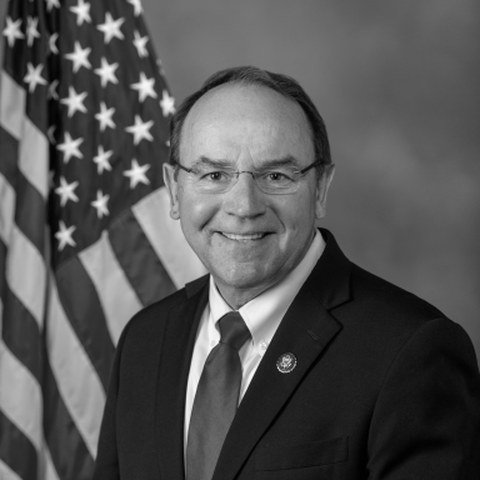
Tom Tiffany
“As governor, I will appoint a new PSC committed to defending private property rights, preserving our farmland, and delivering reliable, affordable energy produced right here in Wisconsin.”
Full response, unedited
“This is the consequence of years of bad energy policy in Wisconsin. Instead of growing dependable baseload power, we’ve shifted toward intermittent sources and greater reliance on imported electricity from other states. The result is higher costs, greater uncertainty, and more pressure to convert Wisconsin’s farmland. As governor, I will appoint a new PSC committed to defending private property rights, preserving our farmland, and delivering reliable, affordable energy produced right here in Wisconsin. I will always make sure local voices are heard, because the people whose lives, land, and communities are affected deserve a seat at the table from the very beginning,” said Tom Tiffany.
Three candidates whose names remain on the printed ballot — Mandela Barnes, Missy Hughes and Sara Rodriguez — ended their campaigns before this survey was sent and were not surveyed.
U.S. House — Wisconsin’s 3rd Congressional District
The 3rd District covers western Wisconsin, including many of the counties in the proposed lines’ path. Each campaign received these two questions:
- What is your position on the proposed MariBell 765 kV transmission line and the associated 765 kV projects (ie, “BECI line”) planned for Wisconsin?
- What is your position on the use of eminent domain to acquire easements from Wisconsin landowners for interstate transmission projects?
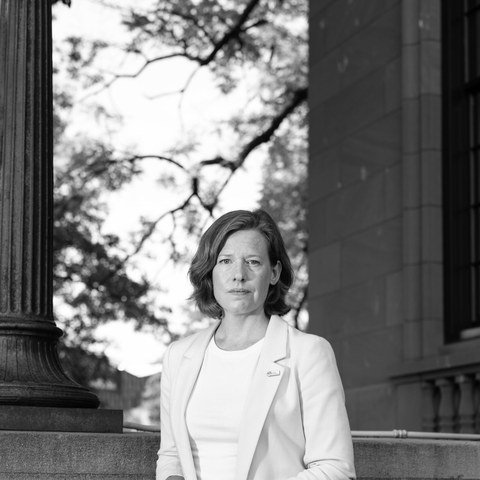
Emily Berge
“I also believe the public need for any project must be clearly demonstrated before private property rights are put at risk.”
Full response, unedited
Hello! I apologize for the delay. Thank you for your patience. And thank you again for giving me this opportunity to respond. Please reach out with any other information. I want to partner with you on this issue. I plan to be at the Richland County Board meeting at the end of this month…as long as I make it through the primary. Thank you for all the work you are doing. I know it’s a lot of work.
1. What is your position on the proposed MariBell 765 kV transmission line and the associated 765 kV projects (i.e., the “BECI line”) planned for Wisconsin?
I have been engaged in this issue, talking with people throughout the Driftless about the MariBell project and now the BECI line. I have heard people’s anger, frustration, worry, and concern. I have also reached out to local organizers and landowners to better understand the issues and the potential impacts on our communities. This is how I lead, and it is how I will serve in Congress.
The concerns I have heard from landowners are consistent and valid. The people of Wisconsin deserve transparency, meaningful public engagement, detailed route information, and sufficient time to evaluate how a project could affect their homes, farms, businesses, and livelihoods. Many landowners feel they have not received the level of communication or opportunity for input that projects of this magnitude require. There are legitimate concerns about the accelerated timeline, the lack of preliminary route maps, and unanswered requests from local governments and landowners for more detailed information.
The decision to approve or deny a transmission line ultimately rests with the Wisconsin Public Service Commission, not Congress. However, Congress plays an important role in shaping the federal policies, permitting standards, and oversight that govern large interstate transmission projects. I also believe an important responsibility of a Member of Congress is to help constituents elevate their concerns and ensure their voices are heard. I will stand with the people of Wisconsin’s Third Congressional District.
It is quite conceivable that these powerlines are being fast tracked to feed the explosion of AI data centers. I have been the only candidate in this race to publicly support a moratorium on new AI data centers until Congress establishes comprehensive federal regulations governing AI and the infrastructure that supports it. I have said this in public forums, on my website, and across my social media platforms. I have not accepted money from AI companies (or CEOs) or utility interests, and I will not. Too often, powerful interests use campaign contributions to gain influence. My campaign is accountable only to the people of Wisconsin.
As a Member of Congress, I will push for greater transparency, stronger protections for affected communities, and a federal permitting process that requires meaningful public participation before projects move forward. Communities deserve complete information, adequate time to review proposals, and a genuine opportunity to influence decisions not simply to be informed after major decisions have already been made.
2. What is your position on the use of eminent domain to acquire easements from Wisconsin landowners for interstate transmission projects?
As a Member of Congress, I would support strengthening federal protections for landowners whenever interstate transmission projects involve federal authority or federal financing.
Before eminent domain is ever considered, developers should be required to demonstrate that they have negotiated in good faith with landowners, thoroughly evaluated reasonable alternatives, provided complete and transparent information, and made every effort to reach voluntary agreements.
I also believe the public need for any project must be clearly demonstrated before private property rights are put at risk. In this case, many landowners and local officials have raised legitimate questions about whether these transmission lines are necessary and whether the benefits justify the impacts on Wisconsin communities. Those questions deserve clear, evidence-based answers before any land is taken or any easements are acquired.
Eminent domain should never be used to maximize corporate profits or shift the burden of private development onto Wisconsin landowners. Billionaires and large corporations should not be allowed to profit at the expense of Wisconsin families, farmers, and local communities. If a project cannot justify its public necessity and earn the trust of the people it affects, it should not move forward through the use of eminent domain.
Congress should ensure that federal law protects due process and property rights. Stronger federal standards for transparency, public engagement, and landowner protections will result in better projects and greater public trust.
The people I have met throughout the Driftless – and all of Western and Central Wisconsin – deserve honesty, respect, and a meaningful voice in decisions that could affect their homes, farms, businesses, and communities for generations. That is what I will fight for in Congress.
I welcome anyone’s thoughts, ideas, concerns on this issue or any other issue. You can reach out to me at contact@bergeforcongress.com or call/text 715 575 9795.

Rebecca Cooke
“To the extent that demand grows independent of data centers, we should be looking seriously at alternative ways to meet those needs before accepting a 765 kV line through this region.”
Full response, unedited
1. What is your position on the proposed MariBell 765 kV transmission line and the associated 765 kV projects (ie, “BECI line”) planned for Wisconsin?
Wisconsin needs a reliable electric grid, and I support an energy mix that includes sources like solar. Protecting our energy future should not come at the expense of one of Wisconsin’s most unique landscapes. The Driftless is unlike anywhere else in the country, and the farmland, water, and communities across Vernon and Crawford counties are worth protecting.
Projected increases in electricity demand are largely due to the creation of new data centers, and I am strongly opposed to those developments, which is why I have called for a moratorium on data centers.
To the extent that demand grows independent of data centers, we should be looking seriously at alternative ways to meet those needs before accepting a 765 kV line through this region. That means modernizing the grid we already have, investing in new technologies, and exploring solutions that minimize impacts on local communities and the environment. The same questions apply to the other 765 kV projects planned for Wisconsin, including the BECI line.
Siting authority for MariBell rests with the Public Service Commission of Wisconsin, and I expect a full and transparent review that gives real weight to landowners and to the county and municipal governments that have already passed resolutions on this project. Their questions deserve substantive answers. I believe we can strengthen our grid while also protecting the communities, farmland, and natural resources that make the Driftless Region so special.
2. What is your position on the use of eminent domain to acquire easements from Wisconsin landowners for interstate transmission projects?
Eminent domain is an extraordinary power and it should be a last resort rather than a starting point. Families in western Wisconsin have farmed and cared for this land for generations. They deserve genuine negotiation, complete information, and fair compensation long before anyone raises the possibility of taking an easement.
In Congress, my focus would be on the federal side of this question. Congress has expanded federal backstop siting authority for transmission in recent years, and I would oppose using that authority to override state review or steamroll local objections. Decisions about Wisconsin land should be made with Wisconsin landowners at the table. I would also work for stronger notice, disclosure, and compensation standards for landowners facing interstate projects, and for full environmental review with real public participation instead of fast-track exemptions that cut communities out of the process.
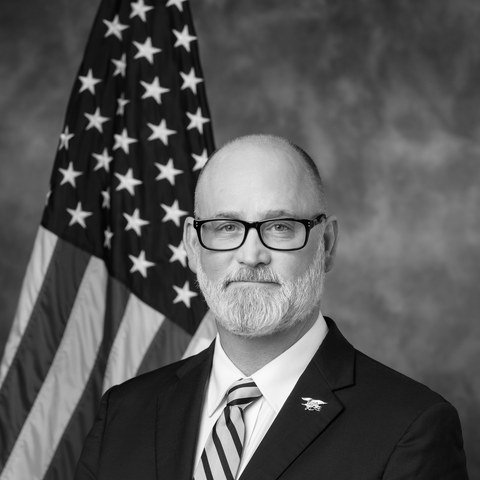
Derrick Van Orden
The campaign was contacted on Jul. 31 and Aug. 3, 2026, and had not replied when this article was last updated. Any response received will be added here in full.
Photo · U.S. House of Representatives (public domain).About the projects the questions describe
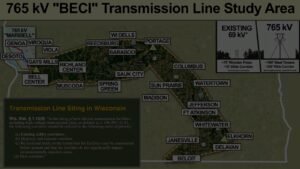
MariBell and BECI are two separate proposed 765 kV transmission projects, both part of a regional plan by MISOThe Midcontinent Independent System Operator — the nonprofit that runs the electric grid and plans large power lines across 15 states, including Wisconsin. It plans which lines get built; state regulators still have to approve them. — its Long-Range Transmission Plan, Tranche 2.1 — running through the Driftless region and on into south-central Wisconsin. MariBell, proposed in Vernon and Crawford Counties, would run about 30 miles in Wisconsin. BECI, a separate ~190-mile project running east and south from Crawford County to the Illinois state line, still has no selected route — as of July 2026 its developer, Midcontinent Grid Solutions, has published a study area of about 2,800 square miles across nine counties (Crawford, Richland, Sauk, Columbia, Dodge, Dane, Jefferson, Rock, and Walworth) and 78 candidate study segments within it.
MariBell’s developers are expected to file their CPCN application with the Wisconsin PSC in fall 2026; MGS says it will file BECI’s in early 2027. Each CPCN proceeding is where the public can formally comment and intervene, and where the Commission can require the developers to study alternative routes.
Source · MISO Long-Range Transmission Plan (Tranche 2.1); MariBell and BECI project materials; MGS project site, mgs-projects.com/BECI (study area and candidate segments retrieved 8/6/2026); Wisconsin PSC CPCN process; campaign timeline
No 765 Line, Inc. is a 501(c)(3) nonprofit organization. It does not support or oppose any candidate for public office. This survey is published as nonpartisan voter education: every campaign in each race covered received identical written questions, and all responses are published in full and unedited. Last updated August 9, 2026.